Cultures In Webs
My good friend Roderick Coover has just released his latest CD-ROM, CULTURES IN WEBS: Working in hypermedia with the documentary image.
Congratulations Rod!
My good friend Roderick Coover has just released his latest CD-ROM, CULTURES IN WEBS: Working in hypermedia with the documentary image.
Congratulations Rod!

I can’t remember ever seeing a cactus flower until I moved to California. Having grown up in the East, where the climate just wasn’t hospitable to such things, cacti and other succulent plants were valued more for their stubborn refusal to die — despite a boy’s difficulty in remembering to water regularly — than for the kind of exotic beauty found in the West.
Enduring my 10th winter in Chicago, I needed some color and a reminder of warmer days.
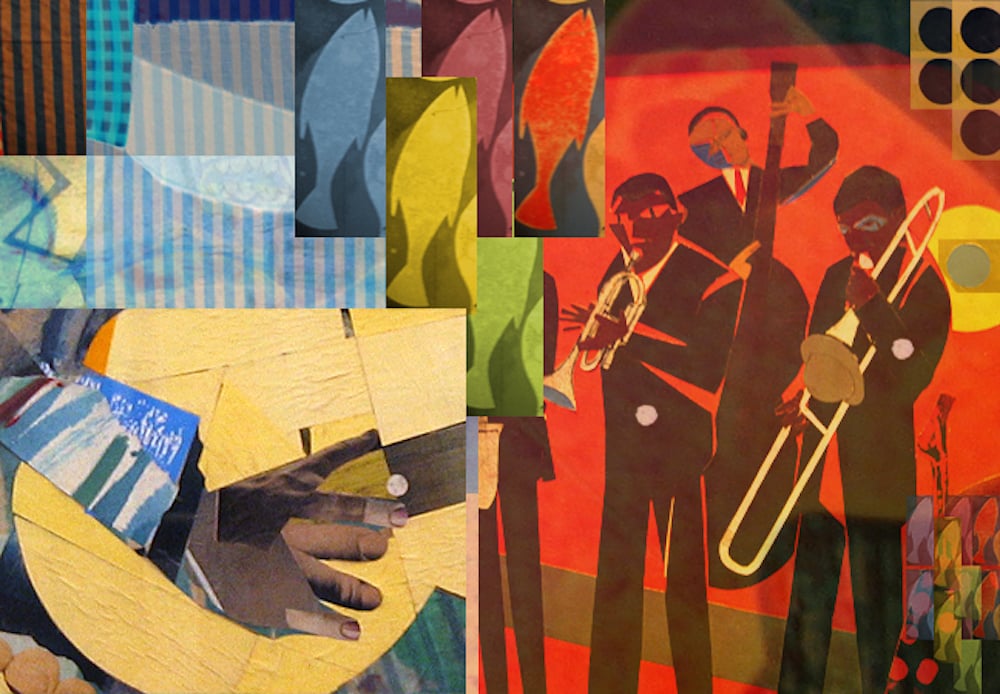
Romare Bearden (Homage), 2003
SG and I spent the Thanksgiving holiday with family and friends in NJ, PA and DC/VA. While in DC visiting E., we had the chance to check out a great Romare Bearden exhibit at The National Gallery. Amazing painting and collage. You can learn more about the artist and his work at the Romare Bearden Foundation.
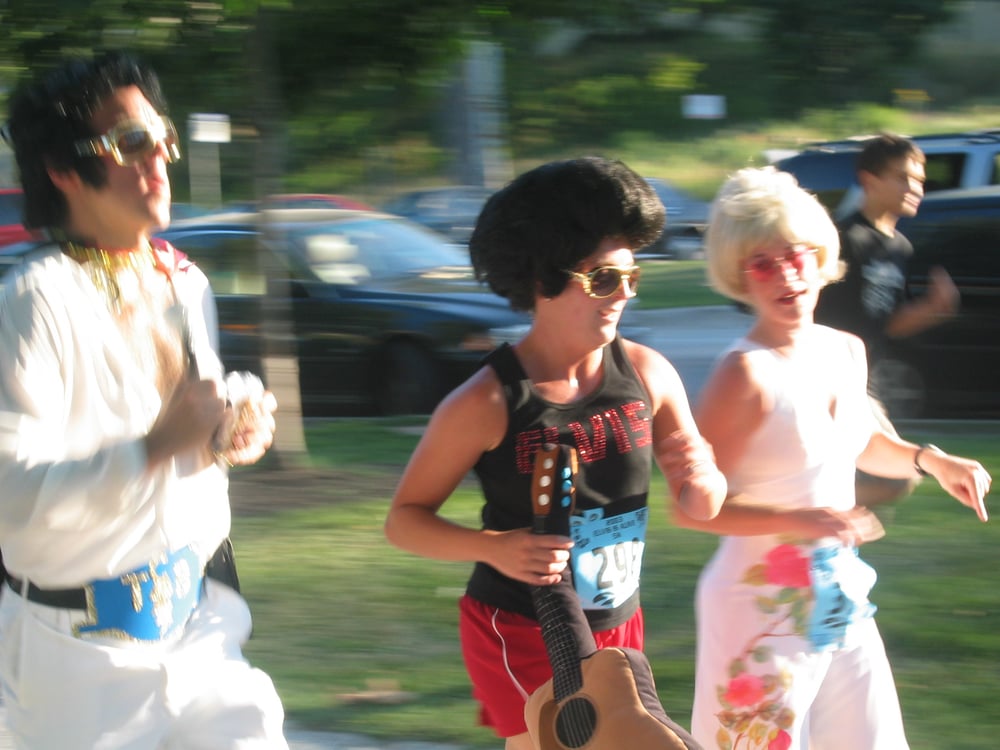
When I look out into your eyes out there, When I look out into your faces,
You know what I see?
I see a little bit of Elvis. In each and every one of you out there.
Let me tell you. Wellllllll….Elvis is everywhere,
Elvis is everything,
Elvis is everybody,
Elvis is still the King.
- Lyrics by Mojo Nixon from “Elvis Is Everywhere” (1987)
Dubbed one of the wackiest races in the country by Runner’s World magazine, Chicago’s Elvis is Alive 5K was certainly all that and more. Congrats to SG for her strong finish and to Rekha for her “PR”! All hail the King.
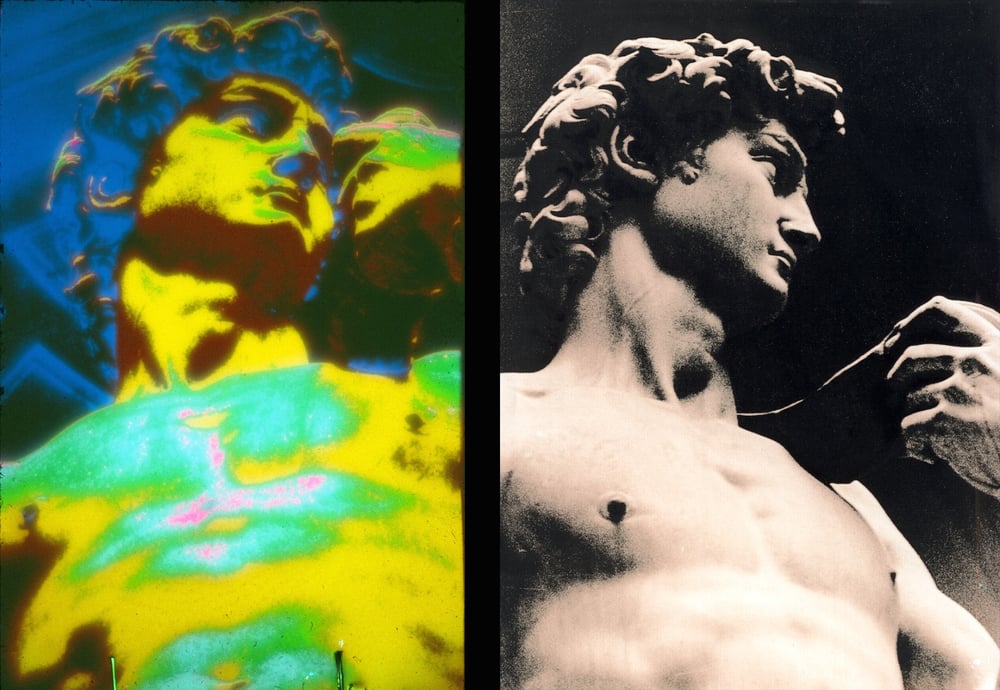
David Revisited, 1987
The images of Michelangelo’s David above are among the first exposures I ever made. It was the Summer of 1987 and I was just learning how to use a camera. My cousin John had sold me his Pentax K-1000 kit, including a 50mm lens, and I was shooting Tri-X 400 film. You couldn’t get more basic. Later that summer I had the chance to make prints from these negatives onto high-contrast Kodalith film and litho paper. With some toning, the image to the right above was the result.
Years later, I took a course in posterization at the San Francisco Photography Center. The instructor had devised a complicated and labor intensive system of photographing a negative at multiple exposures with different colored filters. The image on the left above is just one of many variations we created by the end of the class. Of course, today one can produce litho-like or posterized images quite easily with a few clicks and adjustments in Adobe Photoshop. Still, both experiences opened up for me the many possibilities of photography, and allowed for experimentation with what were admittedly a tourist’s run-of-the-mill shots.
For I have known them all already, known them all: Have known the evenings, mornings, afternoons, I have measured out my life with coffee spoons; I know the voices dying with a dying fall Beneath the music from a farther room. So how should I presume?
from “The Love Song of J. Alfred Prufrock” by T. S. Eliot (1915)
You will take on whatever task comes your way and show great depth and stamina. This is your turning point, your time to show your worth and make things happen. You will be a powerhouse — unstoppable and willing to do whatever it takes to reach your set goal.
from horoscope.com (April 28, 2003)
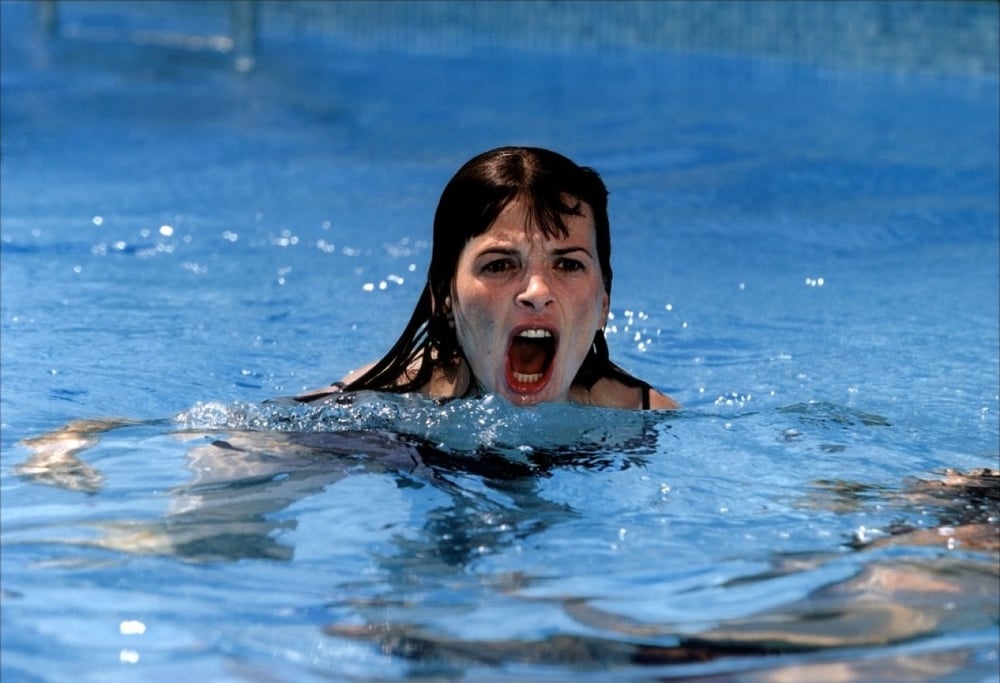
Michael Haneke, Code Unknown, 2000
In any relationship there are decisive moments, often apparently inconsequential but which in reality determine the future, just as a rock or a fallen tree up in the mountains may determine the course of a stream.
- Robert Hellenga, The Sixteen Pleasures
After Irony.
With spring upon us, and the Oscar ceremony — that final, self-congratulatory last word on industry achievement, if not cinematic excellence — only a few hours away, it seems high-time to list my own best film experiences of 2002. The fact that the U.S. is at war makes me more than a little self-conscious about the triviality of such indulgences; still I offer these thoughts perhaps as a brief respite from more grave matters, perhaps too as an inventory of world views counter to the unprecedented myopia that we seem to be victims of these days.
To begin, while the past year was eventful for me in many other ways, not least my marriage to SG, time spent in the cinema was regrettably less than most years previous. Highlights still emerged however, and not all were expected. I’d like to think my absence from film culture has been much less due to a lack of offerings than the growing demands of other pursuits and pastimes.
It is through this personal window of ever-shrinking time that I have culled the following favorites.
Code Unknown (2000, Haneke)
The best movie of the year was Michael Haneke’s Code Unknown (originally released in 2000, but not screened in Chicago until early 2002). Exploring several provocative, if not always original, ideas through loosely connected vignettes — the film is subtitled “Incomplete Tales of Several Journeys” — Code Unknown is a smart, well-realized, if often elusive work. I’ll be honest: on the surface, one may think this film is yet another European art house favorite, waxing about this or that philosophical conundrum. And while I am perhaps too forgiving of this type of movie, in this case, Haneke tempers his big ideas with skillful, unobtrusive filmmaking and an immediacy of experience that thankfully undercuts any threat of cliché or pretension.
The title itself is a clue to the film’s interest in the habits and heuristics of everyday interactions — how we signal distress or desire to one another and how these signals break down or miss the mark altogether; how racism in particular influences choices one makes and the roles one plays, not always by choice. Also, in the same vein as Kieslowski’s masterpiece, Decalogue, the film touches on the many different rules impacting one’s life, again both conscious and unconscious.
Though the movie includes many incidents and scenarios designed to raise difficult questions, two in particular stand out for me. In one, Anne, played by Juliette Binoche, is harassed on a subway car. It is a common occurrence which lacks any truly satisfactory remedy. People take advantage of others, they bully, they scare, and no matter how much one chooses to rationalize their choices — their insecurity, their own fears, their small opinion of themselves — the violence remains, dignity is challenged, and humanity is the worse for it. In another scene, the brutality is heard off-screen. At home ironing clothes and watching television, Anne overhears a neighboring couple’s argument and is unsure of what to do. Contact the police? Call for help? Intervene? Ignore? Decide it isn’t what you think it is? The scene is at once an isolated dilemma, and also emblematic of the paralysis imbued in a society that prizes individual freedom but isn’t sure of how to respond to the abuses that such freedoms afford. In a sense, it is this paradox that the film addresses again and again.
I’m Going Home (2001, Oliveira)
In recommending this movie, I know I’m going out on a limb. Oliveira’s latest effort to reach the U.S. is a tale of an aging actor (played by Michel Piccoli), and his life following the loss of his wife, including a failed effort to play in an American production of Ulysses (an homage to Contempt?). There is a dignity to the movie, one might say even a signature detachment, that threatens to alienate its audience. Nonetheless, I found the premise, and the portrayal of this man both moving and quietly instructive. A worthy alternative to the likes of About Schmidt.
The Hours (2002, Daldry)
The chick-flick of the year, if not the best movie of the year, The Hours will likely be remembered for the strong performances of its three lead actresses — Meryl Streep, Julianne Moore, and Nicole Kidman. It’s much-touted feminist sensibility also seems to have grabbed a fair bit of ink. While there in no doubt that these are prominent features, my own appreciation stemmed from its sobering treatment of depression, female or otherwise. A highpoint is Clarissa’s (Meryl Streep) wistful reflections on the small events in one’s life, often mis-recognized as insignificant or at best beginnings to something yet to come, something anticipated, rather than the key moments that they in fact turn out to be.
Spirited Away (2002, Miyazaki)
Like last year’s Waking Life, this tale of a young girl’s quest to rescue her family further expands the limits of animation, and not just in terms of technical achievement. Hayao Miyazaki’s inventive and entertaining _Spirited Away_follows an innocent’s journey into a magical and disturbing world, echoing such classics as Alice in Wonderland and The Wizard of Oz. I was especially impressed with how the film juxtaposes workaday details and realities with otherworldly flights of fancy.
Far From Heaven (2001, Haynes)
The critical darling of the year, I found Haynes’ redux of Sirkian 50s melodrama an over-saturated exercise in camp, and at times a victim of its own criticisms. I’ve clearly missed the point altogether. And it isn’t because I’m cold on melodrama. Remember Magnolia, and all of its excesses (and, interestingly, its shared cast)? A favorite. And Haynes’ forebears, Sirk and Ophuls? Gifted artists both. Perhaps it is Far From Heaven’s ambitiousness that prevents me from liking it more. As melodrama, it felt more mechanical than emotional, too concerned with re-enacting emotion rather than responding to its many (albeit codified) manifestations. As a political statement about the normative racism of 1950s America, I found it less than ground-breaking and even a bit precious. So, why is it here, amid my “favorites”? I’ve been laughed at for saying so, but the best way I can appreciate Far From Heaven is as a companion piece to Haynes’ 1995 masterpiece, Safe. I can’t think of a more horrifying portrait of the bankruptcy and lifeless disconnect of “late capitalist,” suburban American life. And it is the imagined conversation between these two films that I find most interesting. This and the fact that it has inspired several impassioned debates over the past year makes it a true stand-out, however frustrating.
Find me a dead cloud
and a sharp piece of science
I want to see the skeleton /of weather
And let me map
all maps we have mistaken for the world
And learn by heart the time table of dice
And in our clutching self-invented dance steps see
An accidental grace
A choreography.
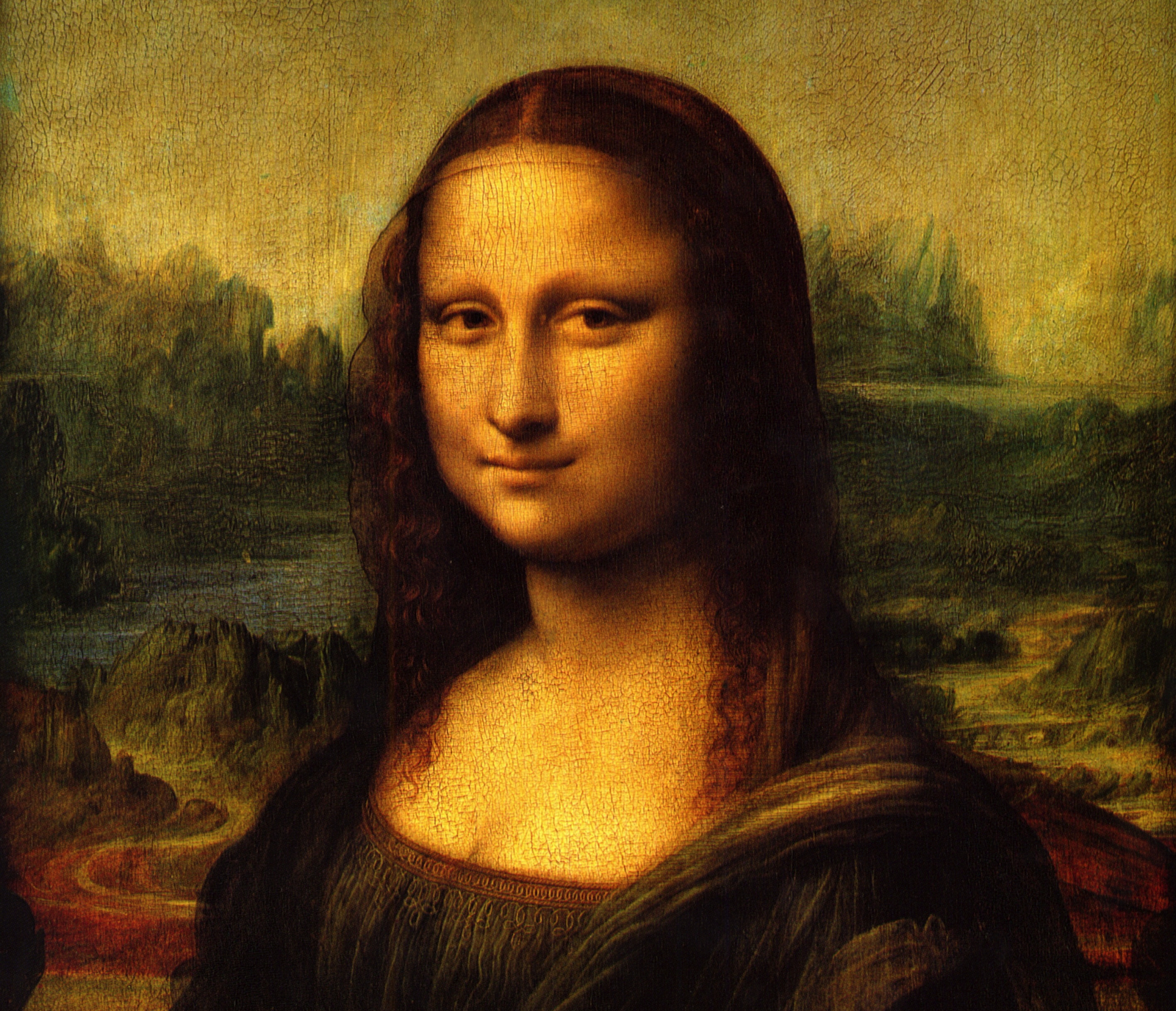
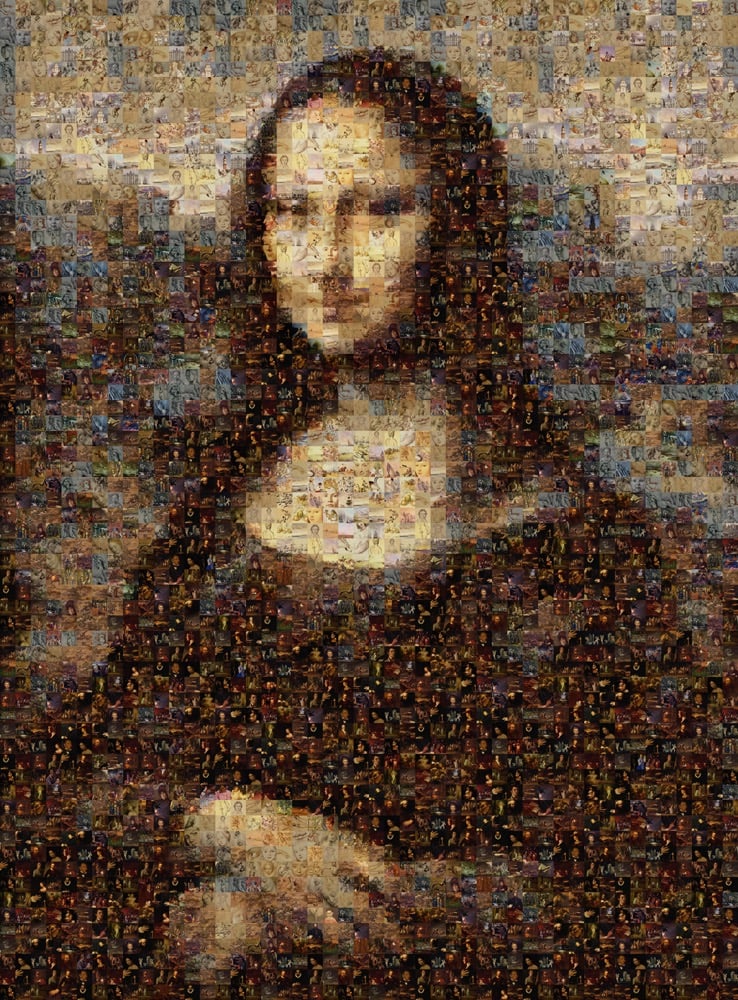
Harvard Professor of Neurobiology, Margaret Livingstone offers new thoughts on the mystery of Mona Lisa’s smile. For more on Livingstone’s theories on the dual nature of vision, go here.
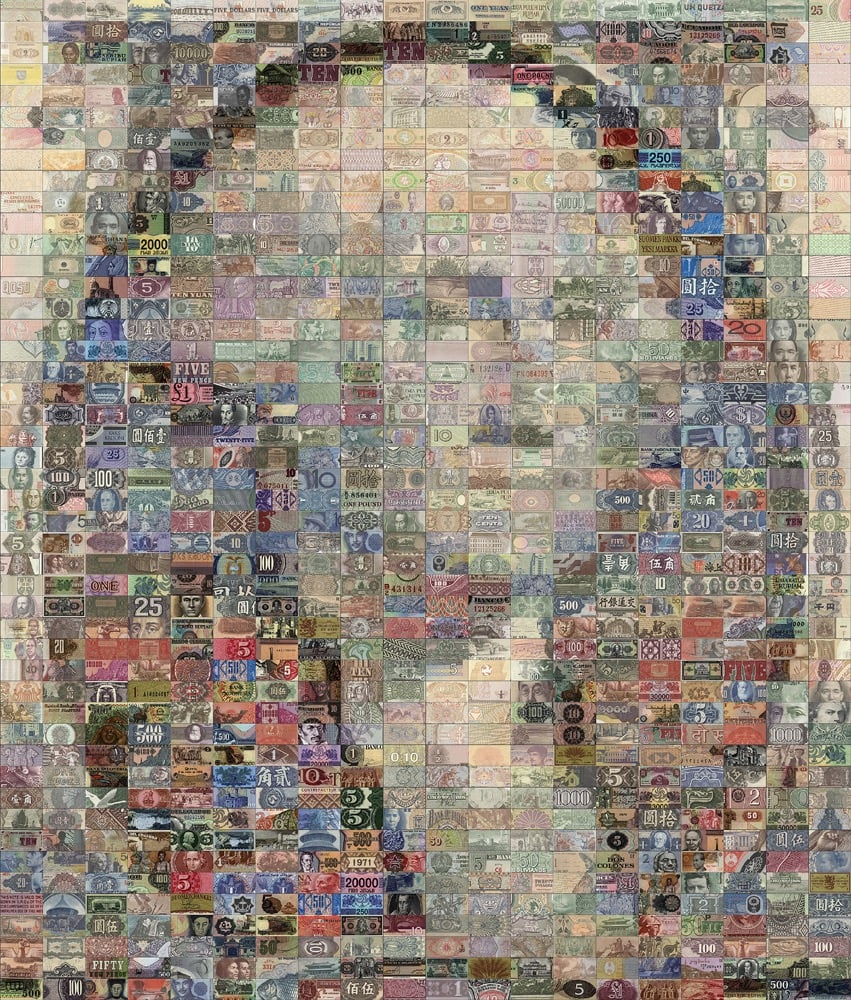
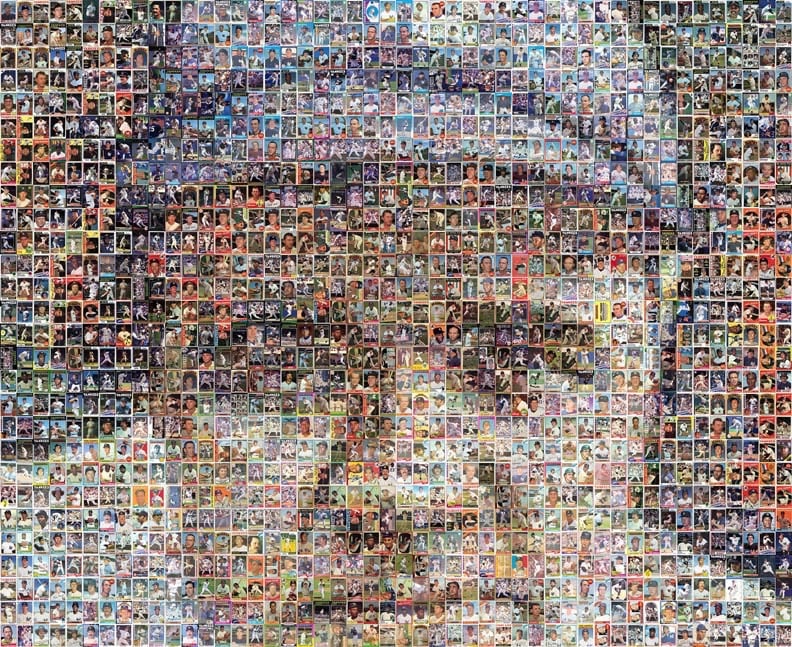
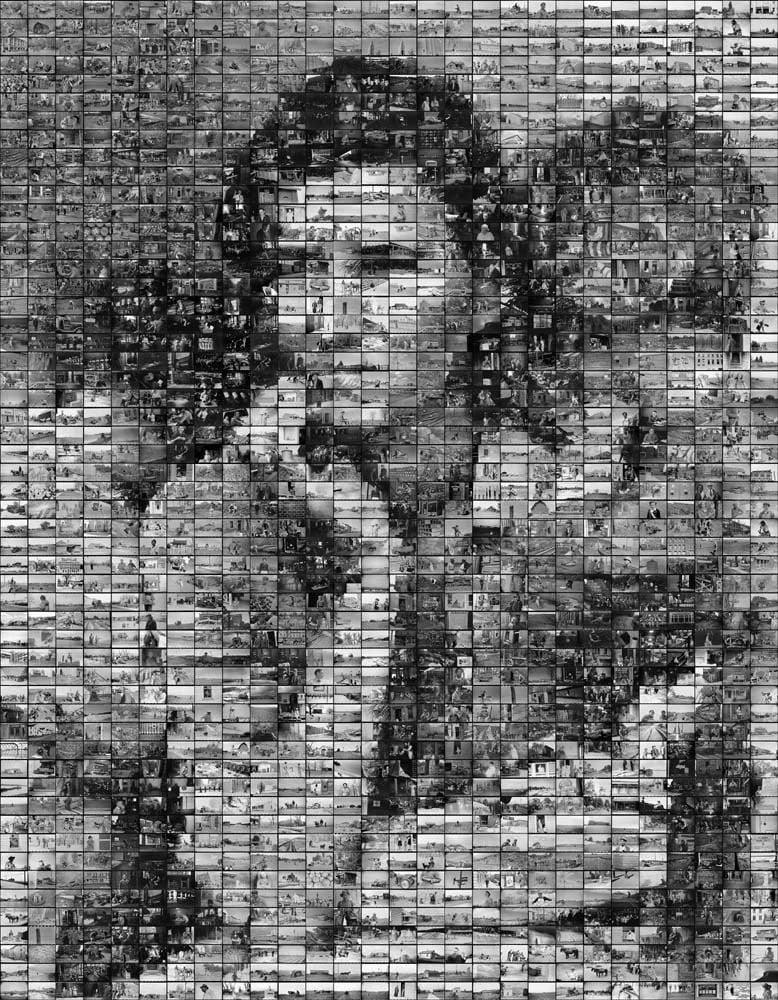
Of related interest, Robert Silver has made a small industry of his photo-mosaics, which are images composed of thousands of tiny photographs. Each collage is assembled by first scanning an original image and dividing it into a grid of “tiles” which are then compared and matched to a database of photographs. The photographs are arranged based on qualities like color, luminance, and texture, but the database sample is typically organized by subject.
Examples include:
George Washington made from the faces of world currency.
Babe Ruth comprised of 1,392 New York Yankee baseball cards.
Dorothea Lange’s Migrant Mother assembled from selected Farm Security Administration photographs.
Marilyn Monroe in her own image. and of course,
I may be a little late to the table on this one. “All My Life for Sale” is a project devised by John Freyer in which he catalogued and sold nearly everything that he owned on eBay (the last item sold was the website domain itself to the University of Iowa Museum of Art on August 11, 2001). Hearing his story on NPR, I immediately felt a modest kinship, having recently culled through most of my own worldly possessions — selling books and electronics, donating clothes and random miscellanea, finally abandoning vinyl and audio and video tape, shredding all but a few of my handwritten writings from over the years, and generally purging all but what I might call the “bare essentials.” While not nearly as thorough a divestment as Freyer’s, the act produced in me an anxious sense of both liberation and dread. No doubt, as a kind of antidote, the next phase will be marked by accumulation. And so it goes.
For Freyer, his project lives on as a travelogue documenting his visits to his sold life, the things that are now hinged to the lives of their winning bidders. Freyer claims the project has become much less about the things themselves and more about the people he’s met through and between them.
Of related note and interest, The Dead Media Project, originally organized by science fiction novelist, Bruce Sterling, chronicles those devices and technologies once but no longer used to record, represent, transmit, transport, translate, save, project, amplify, or otherwise communicate human experience. The list seems a bit dead too these days, but still offers a great archive and reminder of just how transient and fragile our messages can be.
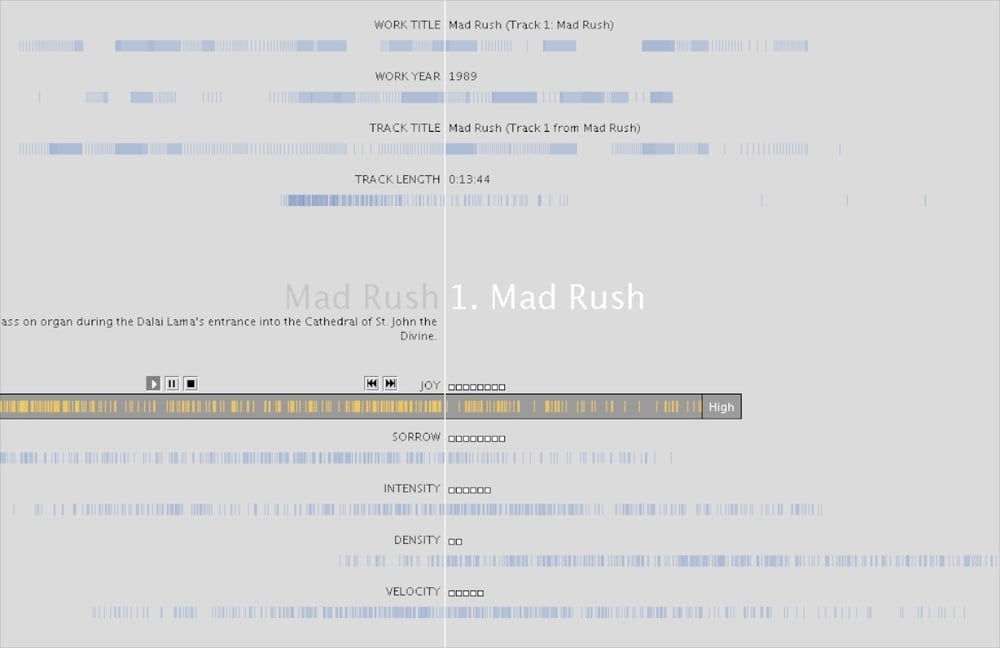
Having recently seen and enjoyed The Hours, including its Philip Glass score, I’ve been getting back into his music. And wouldn’t you know it, Mr. Glass has a website.
There you will find a java applet-based interface for listening to over 60 of his works, simultaneously sorted on sliding scales (e.g., Joy, Sorrow, Intensity and Density). One can also filter by type of work (e.g., Solo, Opera, Film). This “engine,” an IBM research project, is both a good overview of Glass’s work and an impressive example of interface design (though I find myself wanting more, like auto-shuffle and continuous playback).
While the mechanical nature of Glass’s work is obviously highlighted as one slides his or her way from one track to the next, the process also tends to short-circuit the sense of duration one typically experiences in listening to Glass, even with his shorter works. At the same time, the interface provides for juxtapositions between passages to create altogether new compositions. As such, the Glass Engine offers an interesting alternative to the ways we commonly think about organizing data.
The American Dialect Society (via SG) each year votes on which words best “reflect the concerns and preoccupations of the year gone by.”
2002’s winner: Weapons of Mass Destruction (W.M.D.).
Other categories of distinction include:
Most Likely to Succeed: Blog
Most Useful: Google
Most Creative: Iraqnophobia
Most Outrageous: Neuticles
Most Euphemistic: Regime change
For those who are interested, they also have lists for 1990 – 2001.
Heard on NPR this AM (and on the heels of the Powers story):
Artists in Northumberland, England, and Purchase, New York each have turned to livestock to explore randomness in nature, landscape, and language by painting assorted words on sheep and cows. While “The Quantum Sheep Project” and “The Cow Project” both require a good sense of humor, they also exhibit a fair degree of inventiveness.
Back from a Thanksgiving holiday visit to Boston. Highlights of the weekend included a visit to the (relatively) new John F. Kennedy Library and Museum on UMass’s Boston campus, and top-notch no-frills seafood at Jasper White’s Summer Shack, including corn on the cob and steamers by the pound.
In the Kennedy museum, which was roughly designed to match rooms and hallways in the White House, many people took photographs of each other in front of the presidential seal, while I was fascinated by Jacqueline Kennedy’s original trompe l’oeil closet doors. Walking through the exhibits, one got a keen sense of just how important visual culture was in defining the public life and presidency of America’s first 20th century-born president.
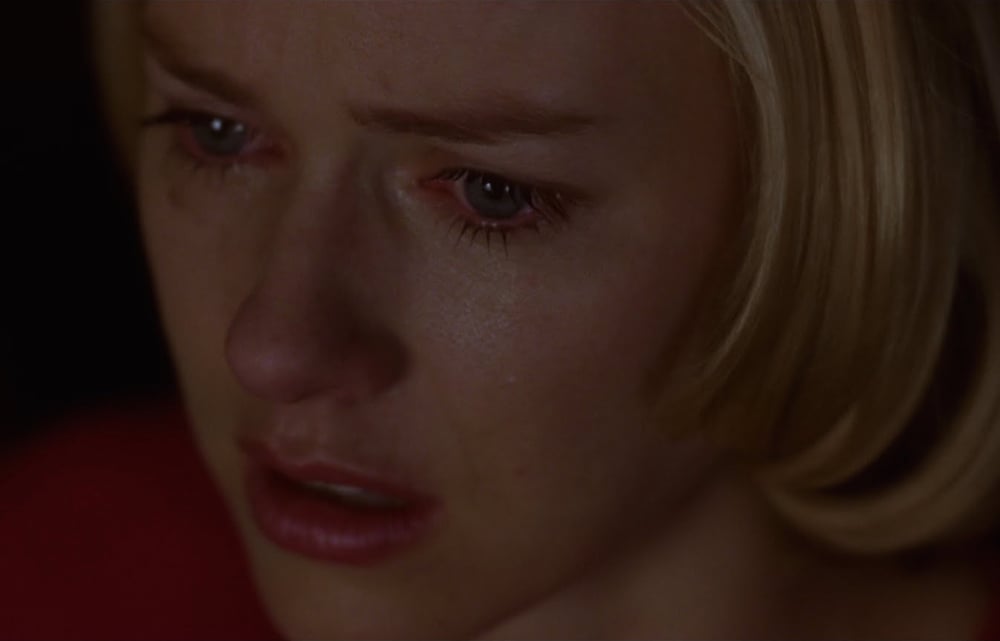
David Lynch, Mulholland Dr., 2001
Really, Really.
In looking over what I consider to be the best movies of 2001, I find it difficult to find a common thread that holds them together, a consistent theme or formal element that I can point to and say — yes, there, that was 2001. If pressed, I might say that to some degree or another they each comment on film history’s age-old obsession, the blurring between illusion and reality. An inventory of: dreams, hyper-real animations, artificial intelligence, theatrics old and new, and more dreams. But that would be too easy.
I’ve cheated a bit, weighing in with more than my usual five current releases and five rep screenings. There were enough good movies this year, or rather, enough points of access to what is good in movies that I felt it worth bending my own self-imposed “rules.” Also, perhaps more than ever, the context within which I watched these films greatly influenced my reaction to them, for better or worse.
See it.
Mulholland Dr.
I had low expectations going in to Lynch’s latest and was more than a little put-off by the endless queue coiling from floor to floor, past Victoria’s Secret and Bally’s Total Fitness, at the new Landmark Century Theaters née mall. Little did I know what was in store. While I can’t say I understand exactly what is going on in MD, I can with a fair degree of certainty tell you that it is stunning to watch and captures a sense of Los Angeles that just seems right. This time out, Lynch manages to combine his trademark atmospherics and oddities with enough structure (including two compelling lead performances by Naomi Watts and Laura Harring) to hold one’s interest in solving his infinite puzzles. Think Maya Deren’s Meshes in the Afternoon (1943), Polanski’s Chinatown(1974), and Lynch’s own Twin Peaks universe rolled up into one.
Waking Life
I’ve seen Waking Life twice — the first time at a special festival screening in October at the Music Box with director Richard Linklater in attendance. I was the one sitting up front and to the right, next to the nervous guy who looked like the lead actor and Linklater regular, Wiley Wiggens. I think I enjoyed the discussion following the screening as much as if not more than the movie itself; Linklater was everything you would imagine him to be — smart, funny, unassuming, inquisitive, sincere, occasionally absent, and, well, real. I also imagine another reason I found this screening to be so profound was due to the then shifted world view in the air following the World Trade Center and Pentagon bombings. I couldn’t not think of the movie in relation to what I witnessed that day and what had been discussed and shared among family, friends, and colleagues during the weeks following. My second viewing, in a New York multiplex, lacked some of the initial energy and excitement of the first. I’m not sure why, though I suspect it might have been due in part to the fact that right then, in New York, people didn’t seem to need a movie to think about the kinds of ideas Waking Life explores. All the same, the film’s technical achievements alone make it the most inventive commercial film I’ve seen in some time. While some have suggested this merely masks a bland, even non-existent narrative, I found the essayistic construction to be a perfect counterpoint to the animated visualizations. It worked for me.
Like Zemeckis’s Forrest Gump (1994), Amélie is a movie about chance that leaves nothing to chance. What gets the story going, the roll of a ball across a floor and the treasure it reveals, while seeming haphazard and random, of course is far from it. And so it is also with the opening sequence of Gump, as we watch the whims of a feather floating to finally come to rest at our lead character’s feet, a box of chocolates carefully tucked at his side. The worlds that are created in each, both perhaps impossible to conceive without the help of computer generated imaging, are clearly guilty of a fair degree of manipulation; and it is on these grounds that it seems Amelie is most often dismissed. Her postcard Paris is suspiciously tidy, its streets a bit too scrubbed.
In years to come I might be a little embarrassed that I found such delight in the Amélie Poulain phenomenon. The first time I saw it, again at a sold out Music Box during the same festival weekend in October, I stood in the back of the theater for about 110 of the entire 122 minute run-time (I was a bit late). Keeping bathroom-goers up-to-date on the film’s goings-on during their absence added a memorable and complementary absurdity to the experience. People will likely remember the heroine’s big eyes, the whimsical feel-good story, the caricatured neighborhood ensemble, and the heart-warming message that goodness prevails and life has a funny way of working itself out. On the other hand, I hope not to forget the inventories of everyday rituals and likes (told with childlike velocity), the careful, even tedious attention to detail in Amélie’s elaborate (and at times problematic) stratagems, and even the rituals and rhythms internal to the film (Amélie’s rock throwing, daily stops at the produce stand, days at the café, her father’s hesitant mailbox visits, Nino’s obsessive collection of discarded coin-op instant photos, Collignon’s annual Renoir, the list goes on). It is as if Jeunet is at once saying these characters are stuck in the same rut day in and day out and need the likes of an Amélie to wake them up to the world around them, to a past and future not yet discovered, but in the same breath suggesting that such an awakening may only be understood and realized in these very same terms.
Va Savoir
This movie, the title of which might be translated best as “Go Figure,” possesses an equivalent disposition: spontaneous, irreverent, light-hearted, foolish, and elusive. Yet, where it lacks the mystery and ineffable spark of previous Rivette efforts such as Haut Bas Fragile (1995), Va Savoir manages to achieve a certain maturity underscored by self-awareness and acceptance.
Moulin Rouge
In this corner: a group of friends who hated this movie so much they couldn’t even finish watching the DVD. In the other: colleagues from work who reveled in its flamboyant visualizations, inventiveness and over-the-top numbers, and I almost forgot to mention, abundance of fishnet stockings and leggy show girls. My own mid-August viewing with SG in a dilapidated suburban Chicago theater amid a sparse crowd of seniors fell somewhere in between. Luhrmann should either be congratulated or slapped for the dizzying speed at which he moves us through his fin de siècle music box. Around and around, in and out, and in every other direction we go. Sheer spectacle is all there is, as it was then and forever more.
AI
Kubrick! Spielberg! The Blue Fairy! Teddy! Kubrick! Spielberg! By turns, intolerable and inspired, AI is another one of those movies that suffers from its own ambitions. Still, past the sentimentality, the (purposefully?) terrible performances (Haley Joel Osment not among them), and the misanthropy, lies a dark examination of the complexities and sometime contradictions of what we might consider technological and socio-economic “progress,” prosperity, personal fulfillment, compassion, and will. It is this last human trait that I found most horrific and interesting in the film. A machine never quits. Never. By way of comparison, I was reminded of the gradual descent into oblivion described in Auster’s City of Glass, where a first step outside one’s doorway leads to another, and then another, until full stop, maybe. Nothing but a cryptic map left behind, a notebook, a mere trace.
Shrek
The result of hundreds of processor years, millions of polygons, and a world-class team of programmers, animators, and designers, Shrek proved to be one of the most technically innovative films of the year, and one of the most clever.
Honorable Mention: Ghost World (Zwigoff, 2001)
I have to include this film if only for the fact that I recommended it to a dear friend — someone who has always impressed me with her open-mindedness with regard to movies — who, when I recently inquired what she thought of it, told me that it is without a doubt the worst movie she’s ever seen. I can’t say that my reaction to Ghost World is nearly as strong, one way or the other, but I did find it enjoyable. While true in its way and brutally funny at times, I wish it had some of the quick-change whimsy of the main character Enid to counter-balance its cool cynicism. Wasted energy perhaps, but energy all the same.
Best Repertory (in no particular order):